Transportation · North America
Transit Vandalism Puts Night Patrol Coverage in Focus
Operators are moving from isolated incident logs to shared patterns across depots, stations, and bus loops.
By Mara Iqbal ·
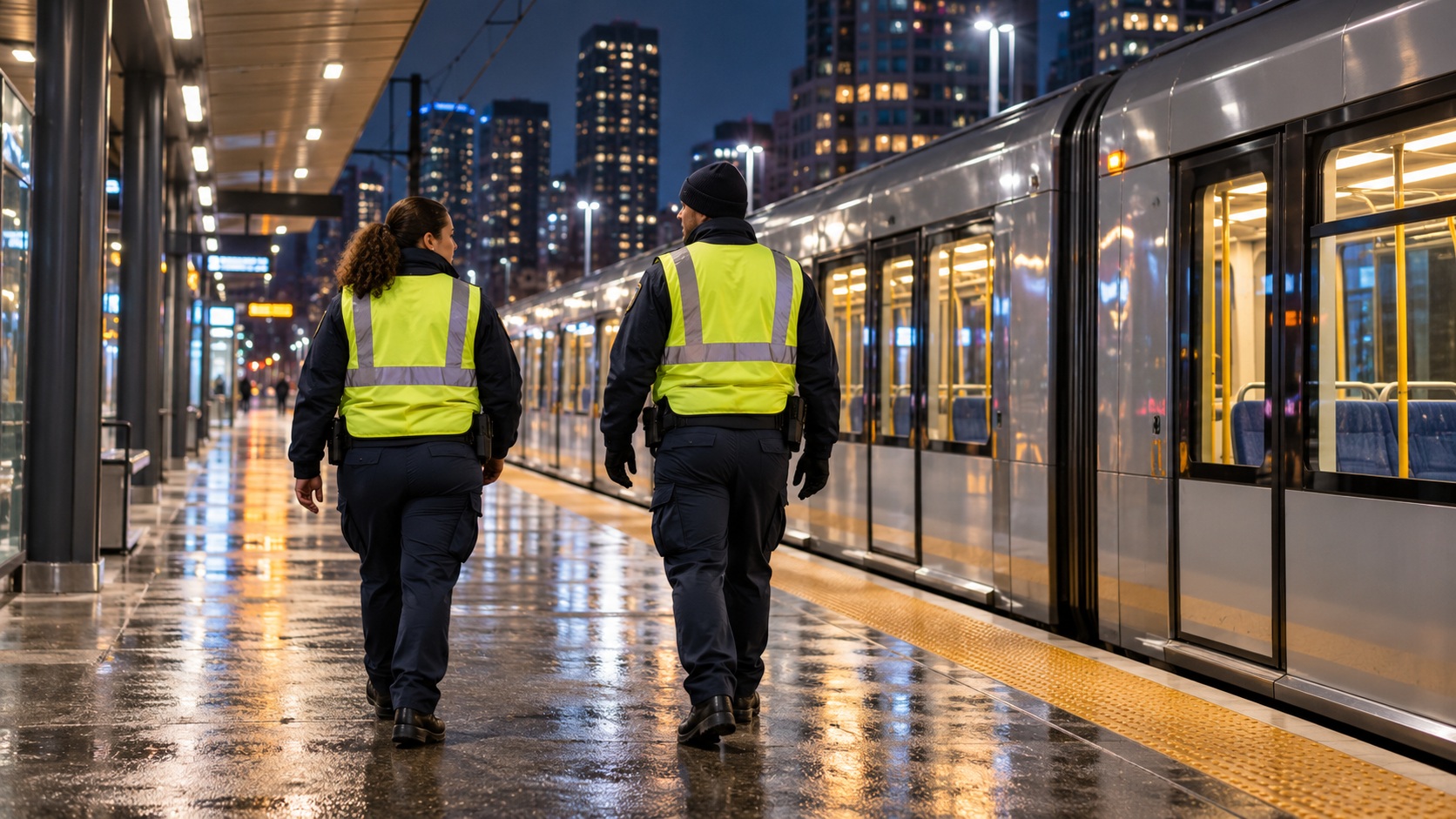
Documented cases in Canada and the United States offer practical lessons for protecting stations, depots and bus shelters after dark.
A vandalised bus shelter can look like an isolated repair job. Similar damage at several locations raises a wider transit security question: how quickly can an operator recognise a pattern and use that information to improve patrol coverage?
Agency reports published in 2026 offer useful lessons for protecting stations, depots and bus shelters after dark. A Metro Vancouver investigation illustrates the challenge of comparing incidents across a dispersed network. Separate announcements in Toronto and Denver show how agencies are approaching staff visibility and targeted deployment.
For security managers reviewing night patrols, the practical task is to connect observations, deployment decisions and follow-up work. The cases below provide context for that review; they do not establish a single coordinated vandalism campaign.
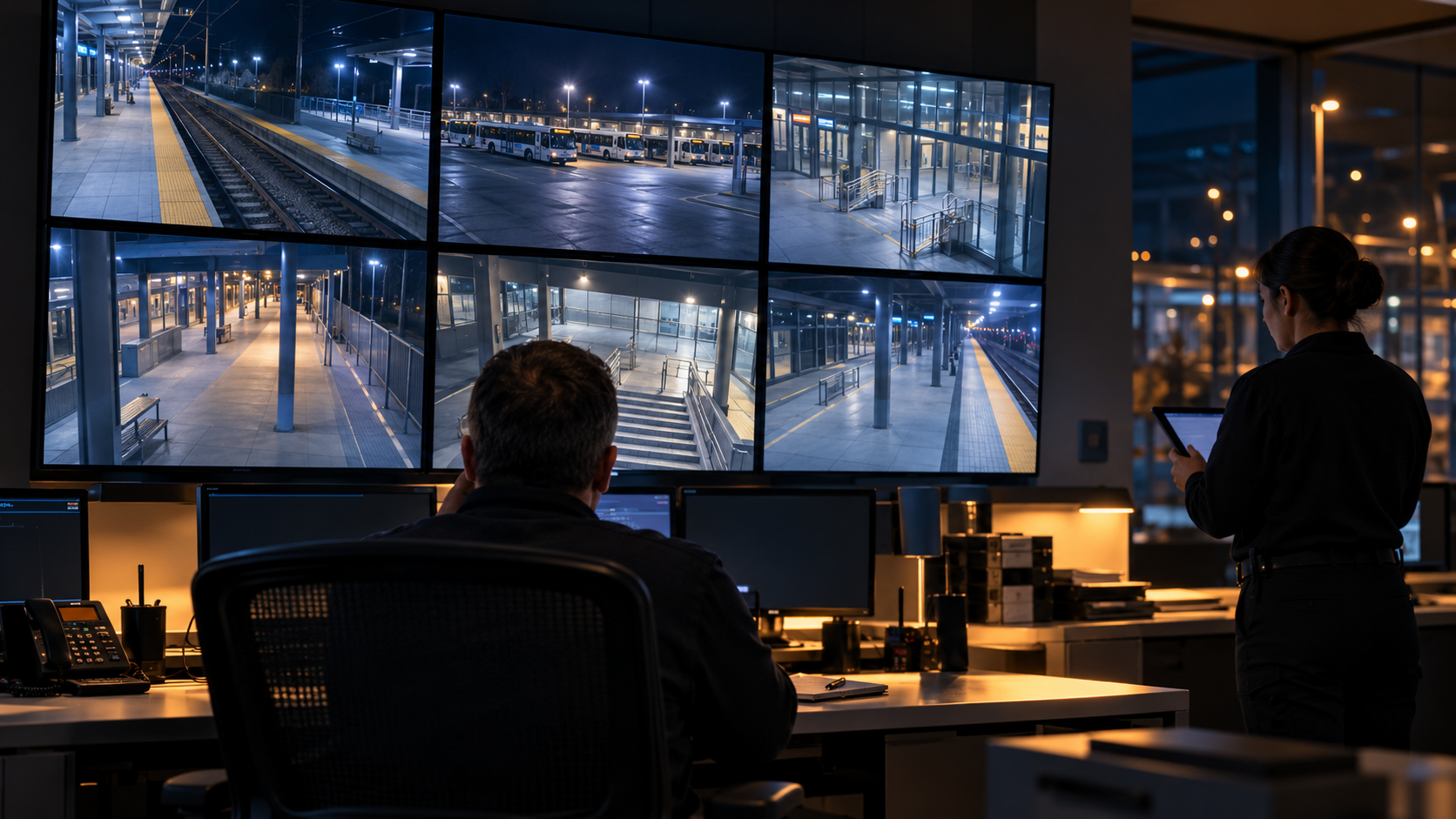
What the 2026 transit security reports establish
Metro Vancouver investigates similar damage across municipalities
On February 24, 2026, Metro Vancouver Transit Police reported three dozen bus shelters with similar vandalism patterns. Police had initially been notified of 14 damaged shelters in Surrey on February 2. The investigation included incidents in Burnaby and New Westminster, and investigators sought information and video footage.
The release did not establish that the damage was coordinated or announce additional overnight patrols. Similar damage is a reason to investigate connections, not proof of a common offender. Transit Police
Toronto plans more dynamic security deployment
In a May 27, 2026 safety announcement, the TTC outlined plans for greater staff visibility, on-vehicle checks and more dynamic, data-informed deployment of security personnel. It also described planned camera expansion and a track-intrusion warning pilot. These were broader safety measures; the announcement did not attribute them to a coordinated vandalism spree. ttc.ca
Denver uses a dedicated team for targeted patrols
In the United States, Denver’s RTD reported on May 5, 2026 that its Bus and Rail Impact Team supplements routine patrols at locations selected using security data. The agency cited repeated G Line copper thefts and patrols at varying days and times. The team launched on March 30, before the April and May thefts cited in the release.
This is a useful operational comparison for Canadian agencies, rather than evidence of a Canadian patrol policy or an exclusively nighttime programme. RTD-Denver
Match night patrol coverage to the evidence
The first step in an overnight coverage review should be to establish what the incident record actually shows. Damage discovered during an early-morning inspection may have occurred hours earlier. Recording the discovery time as the offence time can produce a misleading picture of when additional coverage is needed.
Reports should distinguish the last time an asset was known to be intact, when damage was discovered and any time supported by a witness account or recording. Where the timing remains uncertain, the record should say so.
Managers can then weigh the frequency of incidents against their consequences. A location with repeated cosmetic damage may need a different response from a site where damage could create a passenger hazard or interrupt operations. The review should also consider lighting, access controls, maintenance issues and the availability of a responding team.
Additional patrol hours should have a defined purpose, a responsible supervisor and a review date. That makes it possible to assess whether the deployment is addressing the identified problem.
Turn separate incident reports into shared evidence
A useful incident record should be consistent enough for another shift, contractor or investigator to understand. For a transit network, the following fields provide a practical starting point:
- Location and asset: the station, stop, depot or vehicle, with a consistent identifier.
- Timing: discovery time, last known intact time and any verified occurrence time.
- Observed damage: a factual description, separated from assumptions about cause or motive.
- Supporting material: photographs, relevant recordings, witness accounts and their original references.
- Operational effect: any hazard, restricted access, equipment outage or service impact.
- Follow-up: the person responsible, action required and current status.
A supervisor should be able to compare these records across locations while preserving the distinction between a possible connection and a confirmed investigative finding. Similar graffiti, damage or timing can justify closer review without establishing that incidents involve the same people.
Information sharing also needs a defined purpose. Teams should use authorised systems and follow their organisation’s rules for access, retention and disclosure, particularly where recordings contain identifiable passengers or staff.
Connect security response with maintenance
A patrol report is only the start of the response. The next shift needs to know whether the affected area is safe, whether temporary protection is in place and whether a repair has been assigned.
Where it is safe and consistent with incident procedures, staff should document damage before routine clean-up changes the scene. Immediate safety work should take priority. Original photographs and recordings should remain identifiable, with a record of their source and any handover to investigators.
The maintenance task should stay connected to the security incident. Recording when the repair was completed helps distinguish new damage from an unresolved earlier report and gives supervisors a clearer basis for deciding whether follow-up patrols are needed.
Contract security teams should also have clear escalation instructions. A missed checkpoint, unavailable camera or unresolved hazard needs an assigned response; it should not disappear into the next shift’s paperwork.
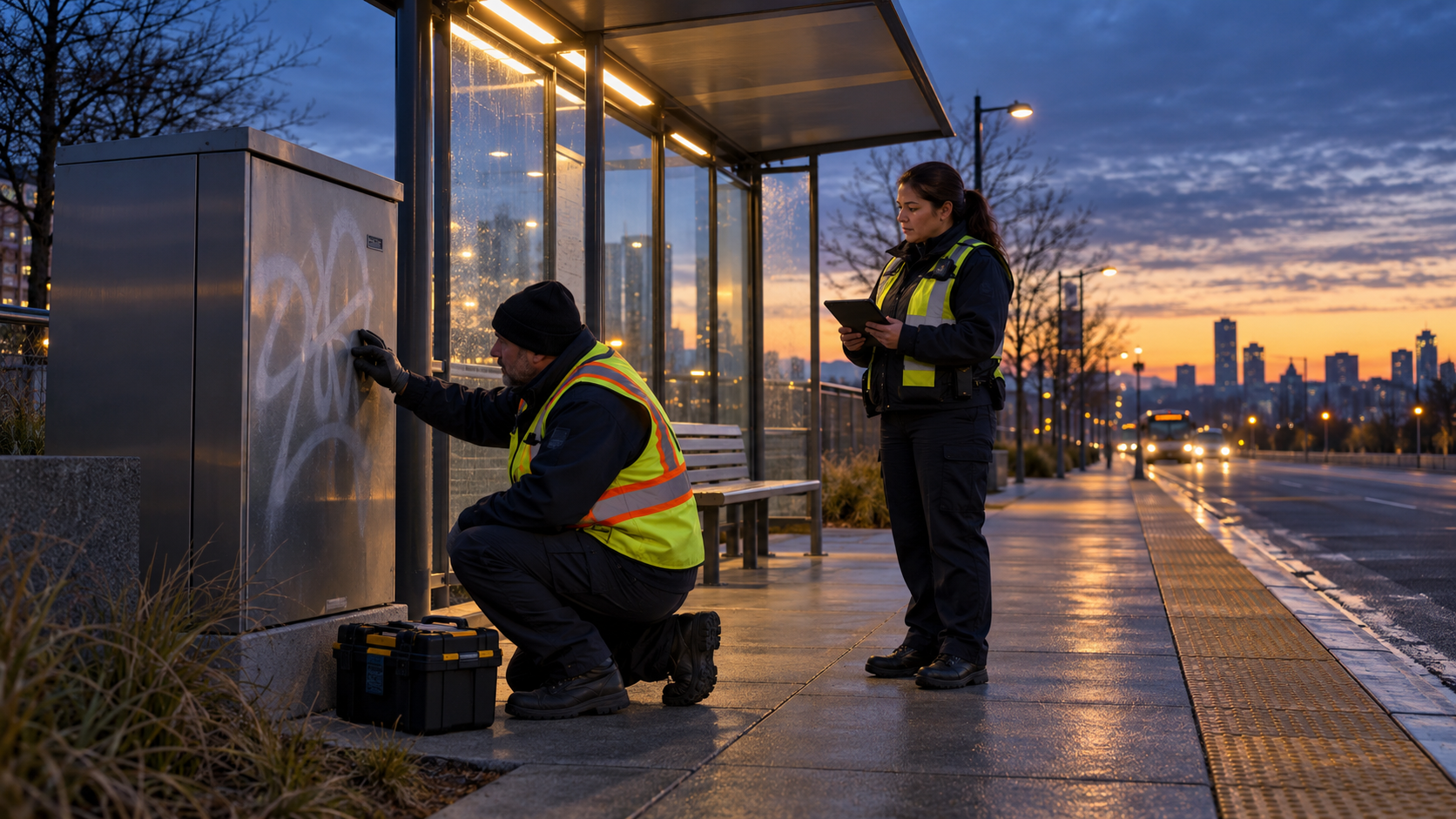
Measure results beyond the number of patrols
Patrol totals show activity, but managers also need to understand what happened after an issue was detected. A practical review can track:
- Repeat damage at the same locations.
- Time from discovery to reporting, assessment and repair.
- Reports with usable photographs, timing information and asset identifiers.
- Outstanding hazards and follow-up actions at shift change.
- Service disruption associated with damage, where recorded.
Interpret these measures together. Better reporting can initially increase recorded incidents, while fewer reports could reflect reduced detection. Comparisons should account for changes in coverage, reporting practices and service levels before managers attribute an improvement to a particular patrol strategy.
Treat transit protection as a service continuity issue
Public Safety Canada identifies transportation among Canada’s ten critical infrastructure sectors and describes resilience as involving security measures, business continuity and emergency planning. publicsafety.gc.ca
For transit operators, that perspective supports assessing damage by its effect on passengers and operations as well as its repair cost. Night patrols should fit within a response that includes detection, assessment, evidence preservation, maintenance and recovery.
That wider connection is explored in SecurityNews.ca’s coverage of **Canada’s critical infrastructure security priorities in 2026**.
A useful next step for a security manager is to review the latest comparable incidents with operations and maintenance staff. Identify what is known, assign unresolved actions and document why any patrol change is needed. The next review can then test whether that decision improved protection and reduced disruption.
Sources
- Metro Vancouver Transit Police: Bus shelter vandalism investigation — February 24, 2026.
- Toronto Transit Commission: Enhanced safety and security measures — May 27, 2026.
- Regional Transportation District: Bus and Rail Impact Team announcement — May 5, 2026.
- Public Safety Canada: Canada’s Critical Infrastructure — page last modified August 12, 2026.
Reporting basis: public agency releases reviewed October 25, 2026. The operational recommendations are SecurityNews.ca analysis. All three images are AI-generated editorial illustrations of representative scenes, not photographs of the reported incidents.